



Digital twin technology

Digital twin technology is an advanced way to add digital representations of physical entities, systems, or processes. Learn more about digital twins from Autodesk.

What is a digital twin?

A digital twin is a virtual representation of a physical object, system, or environment. With up-to-date data bundled in one place, a digital twin evolves with the flow of information from sensors, building information models, IoT objects, and more.Autodesk software collections help architects, engineers, builders, product designers, and manufacturing teams leverage the power of digital twins to save time and money while planning and building smarter, more sustainable products and buildings and developing climate-resilient energy systems and infrastructure.

Heading 1

Subtitle 1

Heading 2

Subtitle 2

Heading 3

Subtitle 3

How do digital twins work?

Digital twins bridge the physical and digital worlds by sending bidirectional data between the software systems and interfaces that connect them. They are “living,” graphically rendered models that can track, predict, and adapt to changes in occupancy, energy use, HVAC and mechanical, electrical, and plumbing (MEP) systems, temperature, light, air quality, and other dynamic conditions.Autodesk Tandem and industry software packages, such as the Architecture, Engineering and Construction Collection and Product Design and Manufacturing Collection, can create high-fidelity 3D building, infrastructure, product design, and factory layout models that form a spatial foundation and data repository for digital twins. Through cloud-enabled integrations that bring together real-time sensor data, AI, machine learning, and advanced simulations, digital twins can remotely monitor and control assets, accelerate design generation, adapt to environmental changes, and connect multidisciplinary project teams through a single, dynamic source of intelligence.

Architecture, engineering and construction

In AEC, digital twins are used to create highly accurate 3D models; test and validate the performance of simulated or actual buildings or infrastructure projects; gather and analyze sensor and IoT data; conduct remote maintenance inspections; and create smarter buildings, rooms, and infrastructure that deliver value across a project’s lifecycle.

Heading 1

Subtitle 1

Heading 2

Subtitle 2

Heading 3

Subtitle 3

Benefits of digital twins

Digital twins provide benefits at all stages of a product or building’s lifecycle, leading to greater investment returns, more sustainable assets, and improved satisfaction among customers and end users.

Project coordination

Digital twins provide a common source of reliable information where thousands of documents, high-fidelity models, and product assets from teams across disciplines can be shared and accessed in real...

Design optimization

Through digital twin simulations, designers can explore and test various design scenarios, such as the seismic tolerance of a bridge or railway, the crash resiliency of a car or e-bike, or the acce...

Operational efficiency

In occupied buildings and metered energy grids, owners and asset managers can use digital twins to receive scheduled maintenance alerts and optimize asset performance through the cloud-connected au...

Time and cost savings

The Center for Integrating Facility Engineering at Stanford University estimates the use of digital twins contributes up to a 40% decrease in non-budgeted change orders, a 9% reduction in lifecycl...

Future-proofing and sustainability

Digital twins are used to predict the future behavior and performance of built systems, which are often equipped with connected sensors that can gather environmental data, test whether devices are ...


Digital twin features Autodesk software supports the creation and management of digital twins with advanced data analysis and simulation tools that can be synced with third-party applications to extend their capabilities.

Real-time data analytics

By 2030, there will be an estimated 29 billion connected IoT devices. Through cloud integrations and wifi-enabled communication protocols, sensor data can be migrated to Autodesk applications such ...

Predictive analytics

With real-time sensor data and predictive recommendations through machine learning and artificial intelligence, maintenance and operations teams can repair or upgrade aging or malfunctioning system...
Simulation capabilities

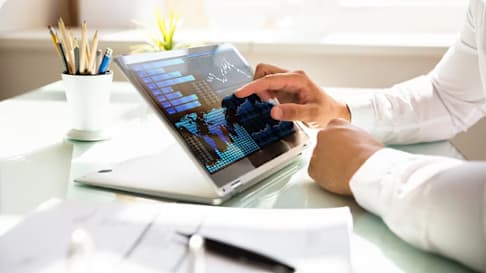
Data-rich simulations offered in InfoWorks ICM, Infraworks, and Civil 3D help architects and engineers develop flood resiliency plans; model renewable energy mobility networks; and develop strategi...
Interoperability and scalability

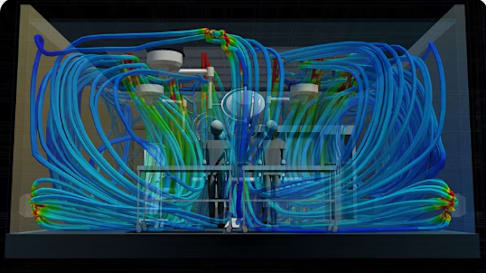
Autodesk collections are designed as federated, cloud-enabled systems that can be fluidly integrated with other proprietary software and linked to sensor systems, supply chain models, customer plat...
Why are digital twins important?

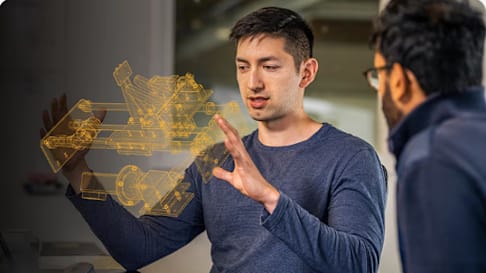
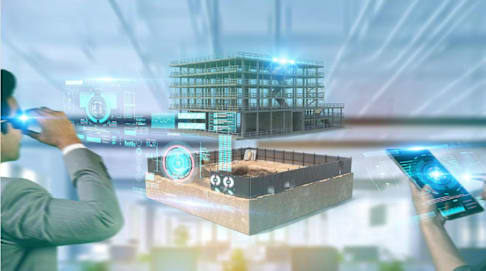
Digital twins are not just a toolset; they are a window into a project at all stages of design, development, and use. In AEC, digital twins provide the means to transform the built asset lifecycle by enabling data continuity between project phases. A digital twin gives a multi-dimensional view of how a facility or asset is designed, built, and is performing throughout its lifecycle. As the digital replica is enriched with operational building data, it becomes possible to predict system failures before they happen, perform “what-if” simulations, and provide rich insights into the operation, performance, and utilization of the built asset. The accumulated knowledge can be used to plan future projects and improve design decisions, leading to more sustainable buildings and infrastructure. 
But digital twins have applications far beyond buildings. Automotive companies use digital twins to prototype, test, and iterate virtual race car concepts. City planners use digital twins to create hydrographs that simulate and mitigate the effects of super-storm floods on storm drains, streetscapes, and surrounding watersheds. Product manufacturers apply digital twins to perform remote inspections and validate designs with customers. The British Antarctic Survey and its partners are using a digital twin to design carbon-informed climate research facilities in Antarctica, saving an estimated 700 tons of whole-life carbon emissions so far.  
While digital twins began as space flight simulation technology developed by NASA in the 1960s, the emergence of cloud computing, artificial intelligence, and IoT have rapidly expanded their functions and capabilities. By helping teams visualize how data-rich systems perform and serving as shared sources of truth, digital twins have been shown to cut costs; lower energy consumption and carbon emissions; and improve product quality, delivery speed, and operational efficiency.

Digital twin use cases Digital twins have applications across industries and project cycles, from predictive analysis to design prototyping, workflow coordination, quality control, and operational management.

Fusion 360 Manage ensures quality control and drives product innovation

VISICONSULT

VisiConsult, a manufacturer of X-ray and computer tomography inspections systems, uses AI-driven digital twins to remotely conduct quality-control evaluations and invites customers into simulated t...
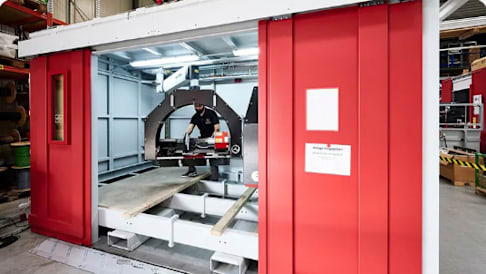
Read story

Modeling the effects of architectural interiors on real-time human behavior

GRESHAM SMITH

In an innovative proof of concept, the architectural and engineering firm Gresham Smith is using a digital twin to fuse ambient environmental data—such as temperature, humidity, and light levels—wi...
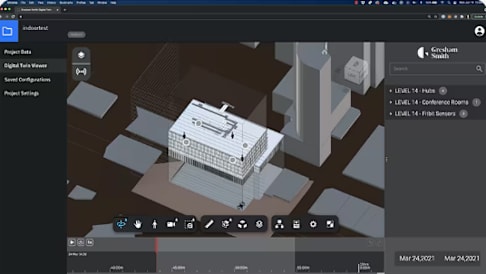
Read story

Interactive models boost factory performance

MOICON

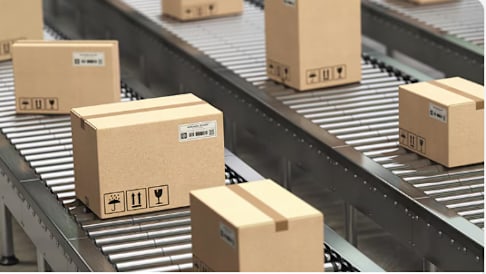
Moicon created its dynamic 3D representation of the sensor-rich factory floor of food product manufacturer Holmen Crisp with the support of APS, resulting in an intuitive, highly automated digital ...
Read story

BIM-modeled digital twin accelerates construction

GAMMON CONSTRUCTION

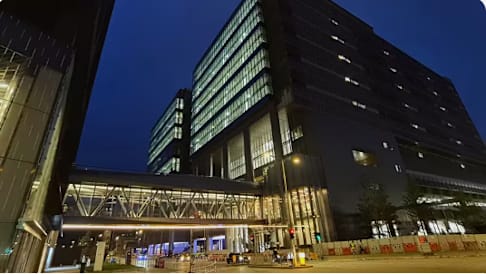
To create a digital twin for the Hong Kong Advanced Manufacturing Centre, Gammon Construction developed 3D BIM models using Revit and Navisworks, which have helped the firm coordinate workflows amo...
Read story

Meet Our Team

The professionals that will work with you

Ed Johnson

Managing Director

Mr. Ed has served as the Chair of the company since 2007 and is a lead director of several international groups and organizations.

Contact Me

Christina Doe

Director

Mrs. Doe is an honorary member of several corporate boards. She plays a crucial role in every company decision.

Ben Hansen

Director

Mr. Hansen is a professor of economic sciences and spent several years as a member of local and municipal governments.

Contact Me