dm-abm-convergence-ebook-en.pdf
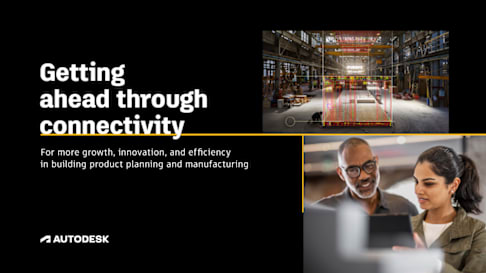
Getting ahead through connectivity For more growth, innovation, and efficiency in building product planning and manufacturing
03
04
05
06
07
08
09
An industry experiencing global change
Customisation, automation, and digital collaboration
Individuality is the new standard
Conserving resources through automation
Opening the door to innovation
Higher revenue through improved customer orientation
Success factors of digital transformation
Table of contents
Rising external requirements In addition to the increase in regulatory requirements, customers are becoming more and more demanding, requesting sustainable solutions that are tailored to their individual needs. This can make it difficult for companies to meet all external requirements while also achieving their own sales and growth targets.
Cross-industry collaboration Due to the high degree of connectivity of industry projects, there are now more requirements for collaborating as well as maintaining a consistent pool of data. Establishing uniform standards and a shared understanding of how to communicate and exchange information is the only way to avoid transmission errors and expensive correction loops.
Tied-up resources and a shortage of skilled workers Just like the rest of the construction industry, building product manufacturers and fabricators are suffering from the shortage of qualified personnel. What’s more, many valuable employees are involved in complex processes that could be eliminated by increasing automation – these individuals would then have more time for other tasks.
How are manufacturers and fabricators of building systems and components such as doors, windows, or façades tackling the various challenges facing their industry while also growing their own business? Using specific customer use cases, we highlight which factors are essential for success.
An industry experiencing global change
CHALLENGES 0 3
In tackling these challenges, you can satisfy customers and regulators alike by offering custom products. Automation helps you free up valuable human and material resources. And at the end of the day, BIM and digital project structures can help you enhance the quality and efficiency of your collaboration. We show you how other companies are taking this road to success.
Customisation, automation, and digital collaboration
THE ROAD TO SUCCESS 0 4
When developing new products, there are many crucial factors: taking into account sustainability guidelines and raw material availability is just as important as minimising the time to market and tailoring products to individual customers. International company PohlCon GmbH chose a BIM-based model to ensure that collaboration among the various project partners runs as smoothly as possible. BIM engineer Dennis Neumann-Börtz talked to Autodesk about how his company – which offers three brands and highly customised products – maintains an overview and leverages valuable synergies.
What makes this possible is having uniform data standards and interfaces: this opens up PohlCon’s collaboration to include not just employees, but also external service providers and customer companies. By way of example, Neumann-Börtz cites the Leidsche Rijn Centrum in Utrecht, the Netherlands, where PohlCon’s subsidiary JORDAHL used BIM to model the design of the building’s entire façade: a megaproject featuring several thousand metres of stonework. Furnished with a consistent data model and parameterised 3D visualisations of the individual components, everyone on the project was always on the same page regarding how construction was to proceed – helped, for example, by having a detailed and reliable list of components. Thanks to the open interfaces in Revit, not only other teams but also customers were able to access the project and compare planning status.
In the past, all information and plans were collected first before drawings were made to launch the planning phase. Today, it’s the other way around: digital drawings are started as soon as the information is available; all relevant data from the connected measurement software is fed in afterwards. “This saves a great deal of time and effort,” Neumann-Börtz says. In this way, BIM-based digital collaboration supports a high level of customisation while maintaining efficient processes.
PRODUC T DEVELOPMENT
Digital All parties access the same pool of data
Individual A range of variations underpinned by uniform standards
Flexible Adjustments to match customer requirements possible even while the process is ongoing
0 5
“Data from design engineers is the most important source we have. Thanks to BIM, this data is available around the clock.”
Dennis Neumann-Börtz BIM Engineer, PohlCon GmbH
Benefits of digital product development
Individuality is the new standard
Read more to discover exactly how PohlCon tackled this project
Read more
https://www.autodesk.com/customer-stories/pohlcon
Belgian company Reynaers Aluminium makes doors, windows, façades, solar shading, and other building products out of aluminium – an easily recyclable but also very valuable building material. Since the company supplies not only construction companies but also specialist partner firms, its product list is long and the requirements for the accompanying documentation are extremely stringent. With the documentation page count at around 50,000 and rising, managing this efficiently by hand was becoming all but impossible.
As the company’s development department had already worked successfully with AutoCAD and Autodesk Inventor, the team in charge of documentation chose Autodesk solutions to automate their processes. With the help of Vault Professional PDM and Fusion 360 Manage PLM, Reynaers centralised its data source in a single location. There, it maintains the information and documentation for all products over their entire lifecycle.
This is a prime example of how digital transformation often begins with the basics and can pave the way for an increase in efficiency in even the most workaday processes. The consistent data set saves time both for the in-house team and the partner companies. In turn, this increases availability and employee satisfaction, and frees up capacity to digitalise other parts of the company.
Reynaers can now also create a requirements list in Fusion 360 Manage for each new product. This ensures that all departments are looking at the same information – from planning to production to data maintenance. This digital transformation began by overhauling a documentation process.
Conserving resources through automation
Increasing efficiency through digitalisation
PROJEC T EFFICIENC Y0 6
Frees up time for further optimisation
Saves time and resources
Automating processes
Doors have always been a must-have in buildings, but up to now they appeared only towards the end of the planning process. dormakaba – a Swiss company that develops access solutions – used digital solutions and its own EntriWorX platform to make the door a relevant product again, well worth being part of the early stages of planning. EntriWorX turns the door into a complete ecosystem for access solutions, one that makes it easier for building planners to incorporate, install, and operate multiple product families. This also saves time, for example by shaving 20 percent off the processing time for door lists.
Coming up with innovative products also requires an organisation that embraces new technologies and digitalisation across all departments: at dormakaba, all teams work with a uniform set of BIM-based data. In addition to preventing ambiguity and unresolved issues, this allows third parties to plan according to correct parameters and data.
In this way, dormakaba has managed to turn its core product, the door, back into a relevant part of building planning. The company’s digital data benefits the entire process – right up to and including operation.
© dormakaba Deutschland GmbH
Opening the door to innovation
Enhanced appeal Digital innovation made the product relevant again
Deeper involvement Digital platform means earlier and longer representation in the planning process
Higher planning certainty Better collaboration lowers the error rate
ENABLING INNOVATION0 7
dormakaba success factors
Focusing more on customer requirements and prioritising collaboration don’t necessarily have to mean losing out on revenue and growth. Thanks to digital solutions and processes, this can even provide a competitive edge. Here, too, we can learn from other companies and other industries. KOCH Industrieanlagen GmbH manufactures robot systems and has applied its expert knowledge to enhance its own processes. Customers are involved digitally early on in the planning process:
What really makes the difference is having a consistent data source that all departments can refer to. This means that errors which would previously have come to light only during assembly can now be identified and resolved already in the planning phase. In addition to saving money, this lightens employees’ workloads. By involving customers earlier, KOCH makes it possible to offer more tailored solutions while also strengthening customer relationships – thus securing revenue and customer satisfaction over the long term.
New processes and systems naturally take a bit of getting used to, helped along by professional change management. But this is time and effort well spent to ensure the success of the migration, increase employee and customer satisfaction, and enhance revenue over the medium term.
Higher revenue through improved customer orientation
GROW TH AND DEVELOPMENT0 8
“We can talk to customers about what details are important to them in the early stages. And they can see these on a 3D model exactly as they will later in real life in their plant.”
Thomas Theis Head of Sales & Project Planning, KOCH Industrieanlagen GmbH
These four case studies show that digital collaboration with partners in architecture, engineering, and construction is a crucial success factor for any company planning or manufacturing building products. But this hinges on understanding the wants and needs of the industry, dismantling data silos, and providing real added value by offering the right solutions and digital collaboration. The following factors are particularly important:
Bespoke product solutions Your customers expect you to offer them products that are tailored to their requirements. Only when your solutions are as adaptable as possible can you hold your own in international competition. This secures long-term customer relationships and opportunities for growth.
Consistent data BIM has established itself as the industry standard. If you provide precise product data that is always up to date, your partners and suppliers will benefit from this stronger working relationship. You can continuously update the digital twins of your products to reflect new situations and insights. This keeps your company relevant and always offers opportunities for future optimisation.
Digital collaboration Planning, manufacturing, and installing building products involves a host of different players. In addition to maintaining a consistent data set, it makes sense for everyone to work with the same software and communication standards to ensure a seamless exchange of information.
Success factors of digital transformation
CONCLUSION0 9
When you tailor and apply these success factors to your own processes and your company, you can achieve a valuable competitive edge. We will be happy to support you on your digital transformation journey.
Interested in receiving more information, articles, and content? Check out our website for more real-life case studies.
Read more
https://boards.autodesk.com/convergence-emea-uk