Henco Industries case study
Autodesk’s Product Lifecycle Management system supports Henco Industries on its innovation mission and sustainable impact vision
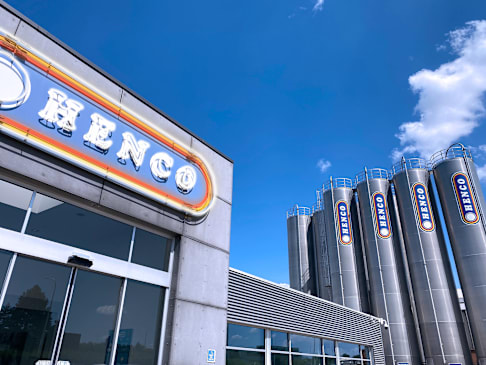
Henco Industries Makes the Connection Between Product Lifecycle Management and Sustainable Innovation Autodesk’s Product Lifecycle Management system supports Henco Industries on its innovation mission and sustainable impact vision
Company: Henco
Location: Belgium
Products: Autodesk PDMC Autodesk® Fusion 360 Autodesk Inventor Autodesk Vault Professional
Founded in 1992, when entrepreneur Louis Hendrickx launched the multiplayer pipe, Henco Industries NV’s is on a mission to make connections. This mission goes far beyond making actual connections or fittings, Henco builds connections between people and buildings and delivers high- quality sustainable multilayer pipes, fittings, and floor heating products.
As a pioneer in pipes and press fittings, which contribute to fundamental improvements in the construction process, Henco has continued to grow year after year. Over the past few years, the company has expanded its team from just over 300 people to almost 400 employees. Boasting an annual production and sales of more than 130 million metres of pipes and more than 11 million fittings of the highest quality, Henco wanted to expand its digital capabilities through Autodesk’s Product Lifecycle Management (PLM) system and Fusion 360 to power further innovation and access higher-value projects.
Impact vision of 70% CO2 reduction by 2030
The buildings sector, which includes energy used for constructing, heating, cooling and lighting homes and businesses, as well as the appliances and equipment installed in them, accounts for over one third of global energy consumption and emissions. The operations of buildings account for 26% of global energy-related emissions (8% being direct emissions in buildings and 18% indirect emissions from the production of
electricity and heat used in buildings). It’s a challenge that continues to grow. In 2022, the buildings sector consumed about 1% more energy than the year before.
Minimum performance standards and building energy codes are increasing in scope and stringency across countries, and the use of efficient and renewable buildings technologies is accelerating. Yet the sector needs more rapid changes to get on track with the Net Zero Emissions by 2050 (NZE) Scenario. This decade is crucial for implementing the measures required to achieve the targets of all new buildings and 20% of the existing building stock being zero-carbon-ready by 2030.
The problem is clear, and so is the need for immediate action.
Henco measures, manages, and monitors both its energy consumption and its CO2 emissions as it aims to reduce the latter by as much as 70% by 2040. In line with the NZE scenario, Henco has pledged to be carbon neutral by 2050.
Driving innovation as one size does not fit all
In the same way that no personal relationship is the same, no building is the same and Henco strives to offer its customers the best pipes, couplings, and accessories so that construction professionals can make a connection. This can be done in 1001 different ways, because no two installation projects are alike. It is not just changing sustainability regulations that are having an effect on the type of challenges installers face today, but also changing customer needs and preferences, in parallel to modern technologies continuously being introduced.
Macro-economic struggles, skills shortages in the industry, and a global housing shortage means that installations in buildings need to be efficient, cost-effective, quick to market and innovative to ensure they are ready for tomorrow’s challenges, as well as today’s.
“The days of sending an email to check in on a design or concerns about version control are over.”
Jill Gielis, Product & Pricing manager at Henco
Henco designs and makes all of its products in-house. The continuous growth of the company has brought its own challenges according to Jill Gielis, Product & Pricing manager at Henco: “We’re immensely proud to make all of our own products in- house, particularly as it contributes to our sustainability goals as we source materials locally, rather than importing from overseas.”
“The challenge for a global company, however, is implementing a structure that is efficient and cost-effective, the benefits of which can then be passed on to the customer. Each department at Henco had its own system and culture. Everyone did their absolute best, but in their own way. There was little cohesion. As a result, mutual communication left much to be desired; various Excel files, different versions of projects, circulated. More and more meetings and consultations were needed, and therefore production was delayed.”
Digitisation and collaboration were key for Henco to implement that structure and it wanted a partner that could help the company be more efficient and improve speed to market. It became increasingly evident that the team was ready for one system to enable departments to work together in order to make it possible to control business growth.
Complex products need connected product development. Open, clear communication is key to faster product development. Designers at Henco were already using Autodesk’s Vault, but to eliminate confusion, data loss, and delays, Henco adopted a cloud-based product lifecycle management (PLM) system from Autodesk, to make sure teams were working from a central source of organised data and to ensure that all departments were on the same page, collaborating efficiently.
Pushing the boundaries of custom design
“We have seen an enormous uplift in productivity and speed to market thanks to the collaboration tools in Autodesk’s PLM
software. Communication is much faster because everyone can feed in and indicate any bottlenecks. It enables our product teams to quickly find and reuse design data and minimise rework and repetitive tasks, each installation is different, so it allows us to be flexible to our customers’ individual needs,” said Jill. On average, customers that use Autodesk Fusion 360 PLM indicate a time saving of at least 15% and a cost reduction of at least 10%. Precious time and resources that can be used for innovation.
Henco builds custom products to help customers solve evolving challenges and to do this, its designers rely on Autodesk’s PDMC collection, including Autodesk Inventor, Autodesk Vault, and Fusion 360. “We take a sustainable approach to product design, but we also need our products to be specific to each customer, so we need to customise at scale,” Gielis says. “Using Fusion 360, we can optimise product design in terms of sustainability and the materials used. We design products in the most cost- efficient way in terms of time to market, allowing us to manufacture at scale.” Digitisation has allowed Henco to stay on top of trends, attract new talent and embrace technological evolutions in its product set, ensuring they remain the best on the market. Each product is created with a view to what the next evolution of it will be, ensuring it is adaptable as new innovations, such as in under floor heating or smart meter technology, for example, hit the industry. According to Jill Gielis: “Henco wanted to be able to move much quicker in the area of innovation. We have the skills and knowledge in house, but we needed to give a structure to the product development process. The best way to do this was to invest in a system that gave us that structure. The days of sending an email
to check in on a design or concerns about version control are over.”
“We had all the pieces of the puzzle, but Autodesk’s software collection has pieced it together. It is a powerful package of applications that supports our product teams design a wide range of multilayer pipes, fittings, floor heating, tools and more. All to facilitate the perfect installation, in accordance with the applicable regulations and provided with the necessary certificates.”
Certification had also been a struggle. With so many products, all requiring specific certification, the process required manually
checking each certification, increasing the risk of human error. Some certifications were out of date, with Henco relying on a large Excel spreadsheet as a way to follow- up, now with Autodesk’s PLM structure, certification renewal dates are automatically flagged.
Connecting the departments
Through PLM, Henco’s teams can view and manage entire projects in one place. This makes their workflow easier; the tools are very intuitive, and designers have created product models that save them time because they don’t have to repetitively create models from scratch. Less time is spent in consultations and meetings to co- ordinate on projects and there has been a reduction in the production time lost due to avoidable errors because different design versions were circulating. Every department, from design, to quality control, to sales has a clearer view on each project’s status.
Empowered by Autodesk PLM, Henco continues to grow and innovate, all with the goal of realising its vision of truly purpose- driven design. “We feel a responsibility as product designers to consider the environmental impact of our work and ensure that we are hitting global Net Zero goals, and now every department can support on Henco’s mission,” Jill concluded.
“Henco wanted to be able to move much quicker in the area of innovation. We have the skills and knowledge in house, but we needed to give a structure to the product development process. The best way to do this was to invest in a system that gave us that structure. The days of sending an email to check in on a design or concerns about version control are over.”
Jill Gielis, Product & Pricing manager at Henco