The Ultimate Guide to Design and Construction Collaboration (ENG)
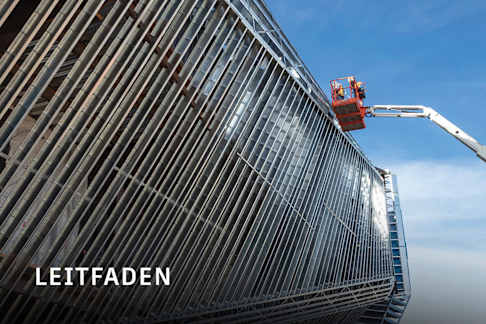
In diesem Leitfaden erhalten Sie praktische Orientierung für den Einsatz von Kollaborations-Tools im Bau- und Ingenieurswesen.
The Ultimate Guide to Design and Construction Collaboration General contractor
01 Contributors 05 How to collaborate better with design & engineering
02 Introduction 06 How to collaborate better with specialty contractors
03 Why collaboration is important for general contractors
07 How to collaborate better with owners
04 Benefits of collaborating throughout the project lifecycle
08 The closeout
Contents
02 The ultimate guide to design and construction collaboration
Linn Areno
Head of Construction and Engineering
Solutions,
Stockholm, Sweden
Skanska Sweden
� I lead a core team in delivering
construction and engineering solutions
within Skansk�
� I love to find new ways to solve problems,
and I embrace creativity to stretch
boundarie�
� I focus on finding new ways to benefit from
information flows, digital solutions, and
communication in construction project�
� I’m all about developing solutions to make
things easier, not repetitive
Brant Fischer
Project Solutions Executive,
Cincinnati,
Ohio, United States
Messer Construction Co.
� I have worked in the construction
industry for over 17 years�
� I lead quality control process and projects
control divisio�
� I’m a big construction technology evangelis�
� I have extensive experience in healthcare
and research construction project�
� I operate a small family tree farm with
my brother and love to play inline hockey
John Lim
Chief Digital Officer, Petaling Jaya,
Selangor, Malaysia
Gamuda
� I lead innovation at a multinational
construction compan�
� I was recognized for Technical Innovation in
Tunnel Excavation from New Civil Engineer
in 201�
� I was also recognized for Technical Product/
Equipment Innovation of the Year by the
International Tunneling Association in 201�
� I led design of the world’s first autonomous
tunnel boring machine (TBM) progra�
� I’m hooked on Taylor Swift right now and
I’m a longstanding John Mayer fan—“Gravity”
is my go-to song
Contributors
https://www.linkedin.com/in/linnareno/ https://www.skanska.se/en-us/ https://www.linkedin.com/in/brantfischer/ https://www.messer.com/ https://www.linkedin.com/in/johnlimjix/ https://gamuda-get.com/
03 The ultimate guide to design and construction collaboration
Tony Peleska
CIO and Head of Digital Transformation,
St. Paul, Minnesota,
United States
Kraus-Anderson
� I have over 17 years of business-oriented
technology experience in the legal,
banking, and financial service industrie�
� Before Kraus-Anderson, I was CIO at the
Minnesota Housing Finance Agenc�
� I served as Chairman of the Board and
now serve in the Company of Fellows for
the Association of Intelligent Information
Management (AIIM�
� I am currently Chair of the Gartner
InspireCIO Minnesota Chapter, and a
member of the National Council of State
Housing Agencies
Amr Raafat
Chief Innovation Officer,
Boston,
Massachusetts, United States
Windover Construction
� I have 20+ years of experience in
architecture, engineering, and constructio�
� I lead Windover’s VDC and IDEA™
(Innovations for Design, Engineering,
and Automation) team�
� I’m a champion of pioneering
construction technologies to streamline
project procuremen�
� I received Innovator of the Year at the
2019 Autodesk AEC Excellence Award�
� I earned my black belt in karate at 16
years old
Daniel Smith
National Digital Technologies and
Development Manager,
Sydney, Australia
Hansen Yuncken
� I’ve worked in the construction sector for
over 18 years, in roles ranging from BIM/VDC
to technical consultin�
� I’m focused on delivering a technology
strategy that drives economic and efficient
returns to the busines�
� I’m passionate about the application of
emerging technologies like AI, automation,
digital engineering and Design for
Manufacturing and Assembly (DfMA�
� I used to love playing competitive football
on the weekend
Contributors
https://www.linkedin.com/in/tony-peleska-2839102/ https://www.krausanderson.com/ https://www.linkedin.com/in/amr-raafat-b27255a4/ https://www.windover.com/ https://www.linkedin.com/in/danielsmith85/ https://www.hansenyuncken.com.au/
04 The ultimate guide to design and construction collaboration
Greg Smith
Director of BIM/VDC,
Camas, Washington, United States
Yates Construction
� I’m a construction technology leader in
VDC, BIM, project management,
curriculum, and desig�
� I serve as a trusted advisor and leader in
the construction industr�
� I drive the use and awareness of Autodesk
Construction Cloud within Yate�
� I develop relationships with industry
leaders and higher education
representative�
� I love to float in sensory deprivation tanks;
it’s therapeutic for my body and mind
Praseedha Subramanian
VDC Project Manager,
San Francisco, California, United States
DPR Construction
� I have over 8 years of experience in life
science, healthcare, and advanced tech
constructio�
� I’m skilled in the use of platforms like
Autodesk Revit, Navisworks, Autodesk
Build, Assemble, and mor�
� I received Extraordinary Service
Recognition from Tesla University
Recruiting Team for work on Gigafactory
01 and 0�
� I’m an active mentor at the ACE Mentor
Program of Americ�
� I love crafting detailed itineraries for
travel of all types and playing volleyball
Contributors
https://www.linkedin.com/in/smith--gregory/ https://www.wgyates.com/ https://www.linkedin.com/in/praseedhasubramanian/ https://www.dpr.com/
Introduction There’s no “me” in construction, but there is an “I.”
� Do I have all the information I need?�
� Will this software/tool do what I need it to do?�
� Am I done for the day?
What works for one team member—or one company—
can cause friction for others. Specialty contractors can’t
access data after a project ends; general contractors can’t
see the latest architect designs; and owners can revise
budgets after designs are already agreed upon.
Collaborating early beyond a company’s walls is critical
to profitability, with poor communication costing the
construction industry approximately $17 billion per year.
But most communication takes place within a company’s
(virtual) walls, with 2.5 internal collaborators working on
documents for every 1 external collaborator.
Collaboration isn’t just about working together. It’s about
harnessing collective expertise of each stakeholder at each
company; aligning objectives; and navigating challenges as a
unified front. After all, there may be tens or hundreds of
stakeholders on a project, but there’s only one final output.
So, how can you, as a general contractor, work better with your
external partners at each stage of a project? We asked 8
construction leaders across the globe about how they best
collaborate on construction projects (and validated their
insights with a specialty contractor, a designer, and an owner).
This guide is packed with their insights, expertise, and
strategies meant to help you better collaborate with external
and internal partners throughout the lifecycle of a project,
so you can deliver high-quality work on time and on budget.
05 The ultimate guide to design and construction collaboration
https://www.autodesk.com/blogs/construction/digital-collaboration-trends-infographic/ https://www.autodesk.com/blogs/construction/digital-collaboration-trends-infographic/ https://www.autodesk.com/blogs/construction/digital-collaboration-trends-infographic/
06 The ultimate guide to design and construction collaboration
Brant Fischer
Construction is a people business. You
can’t effectively deliver a construction
project or operate a building without
collaborating with dozens of people.
You can’t build a building solo, so
collaboration is 100% necessary.
Linn Areno
All the stakeholders in each project are
dependent on each other. Everyone
refers to projects as “my project” and we
must change that to “our project.”
John Lim
Collaboration is important throughout
the lifecycle because it ensures the best
decision making, reduced mistakes and
timely completion.
Tony Peleska
Having a collaborative relationship from
the start, like on design-build projects,
is going to set you up for success. If you
don’t do that correctly, you’re setting
yourself up for failure or rework.
Daniel Smith
Collaboration ensures better alignment
and understanding of all stakeholders’
(from consultants to builders/
subcontractors through to clients)
expectations and requirements for
the project.
Amr Raafat
Collaboration throughout design,
construction, and operations delivers
essential insights, fostering collaboration
and integrated decision-making.
Greg Smith
Communication is the number one
issue in any organization. The better
we communicate, the more success
we will have on any project.
Praseedha Subramanian
As a VDC manager on high-impact
projects, it is crucial to facilitate data-
driven decision-making and prevent
any issues.
Why is collaboration important
for general contractors?
07 The ultimate guide to design and construction collaboration
Benefits of collaborating throughout the project lifecycle
Connectivity
Tony
You’re able to understand where your data flows from. What
starts as an architect’s idea goes into our hands, into the build,
into the output at the very end. Being able to house that
information, see it come through the platform, and integrate
tools to follow the line of that data and for every job is critical.
Problem-solving
Praseedha
As a VDC manager on a cross-functional team of 80-100
members, it is crucial to streamline and facilitate data-driven
decision-making processes. A single source of truth is directly
linked to increased team morale and trust.
Skill-building
Daniel
Collaboration facilitates skills development through
knowledge sharing and lessons learned among various
stakeholders, pushing for better project outcomes. Plus,
it fosters an environment that promotes innovation and
value engineering, enhancing the overall efficiency and
effectiveness of the project.
Communication
Greg
The better we communicate, the more success we will have
on any project. Do we want success? Or do we want failure?
We have to remember that the entire team; owners,
designers, general contractor, and trade contractors; are all
working on the same team. We need to all have the same
goal of project success and to work towards that goal as a
team. It’s not about “me.” It’s about “us.”
08 The ultimate guide to design and construction collaboration
Benefits of collaborating throughout the project lifecycle (cont.)
Unity
John
Construction is a highly people-dependent process spanning
many disciplines. As an industry, we owe it to our fellow
global citizens to transform to meet the ever-growing needs
of building tomorrow’s infrastructure. When we all come
together, we can drive success.
Quality
Linn
If we don’t see projects as a big team effort, it’s not going
to be a great product. When we work on a “OneSkanska”
project where we are vertically integrated, we can see the
direct outcome of working together. We can develop the
land and design, construct, and maintain in a more holistic
way. The products meet higher standards and new way of
doing things is always appreciated.
Foresight
Amr
Collaboration empowers stakeholders to achieve consistent,
streamlined projects from planning through construction.
Taking a proactive approach, like conducting in-wall scans
during construction, provides valuable data for future
maintenance, benefiting facility managers and owners.
Efficiency
Brant
Projects today move at such a fast pace; the risk exists to
build incorrectly or make mistakes because of delayed/
duplicated/ incomplete communications. Using a common
tool keeps teams working together on the same platform
throughout the project.
09 The ultimate guide to design and construction collaboration
How to collaborate better with
design & engineering
Without a design, you don’t have a project to start on. Seems like a simple enough fact, but getting this design data can be a fraught process. So fraught, in fact, that incorrect, late-issued, and incomplete designs are among the top five causes of capital project claims or disputes worldwide.
So if late, incorrect designs are a global problem, how can general contractors work better with design/engineering? Our experts approached the responses from different angles, but they all aligned on one common takeaway:
Share information as early and as often as possible.
Designers agree
I think it’s never too early for the construction team to have insight on the design. They can provide valuable feedback that’s much easier to be implemented when the design is fresh & flexible. For general contractors, I think it’s important to communicate early, and establish what software platforms will be used. Regular coordination meetings with clear goals for each meeting are essential.
Ryan Gorman, BIM Manager, WJ Architects
https://www.hka.com/crux/crux/ https://www.hka.com/crux/crux/
Tony
At Kraus-Anderson, it was critical to look a
construction management platform’s use
from project inception to architects’ designs
to closeout. We asked ourselves, “How easy
would it be for the end user to take data from
one part of the project to the next, and so on?”
John
On the design side, we ensure that
designs are started in 3D in one
construction management software
platform where everyone can tag issues
and respond to comments in a
transparent manner. This encourages
participation across our internal and
external design and engineering teams to
produce a robust and clash-free design
before it goes to site.
Amr
Our VDC team recently utilized AI-enabled
generative design to optimize 2D MEP,
structural, and architectural drawings into
BIM data. This approach ensures early code
compliance checks and streamlines the
planning and permitting process for design
teams, owners, and municipalities.
We also use model-based estimating
solutions to streamline quantity takeoff
early in the process. This ensures accurate
estimates during the preconstruction phase,
allowing the estimating team to focus their
invaluable experience on critical tasks rather
than on counting and measuring quantities
from drawings, reducing quantity takeoff
time by more than 50%.
Daniel
We emphasize transparency around
work-in-progress (WIP) designs to monitor
design progression. We use one construction
management software platform to host,
share and consume design information.
With one shared tool and implementing
more efficient process for sharing information
in a timely manner, streamlines the
coordination process, reducing rework,
and enhances overall project collaboration.
This process also provides transparent access
to non-technical users, enabling them to offer
feedback in their areas of expertise, particularly
in the area’s constructability and cost control.
Brant
A team approach is strategy #1 when
collaborating with design/ engineering
teams. We’re all working together to
deliver a project and working together
collaboratively, respectfully, and efficiently
are key. Using a common tool keeps teams
working together on the same platform
throughout the project.
10 The ultimate guide to design and construction collaboration
Collaborate better with design & engineering
Start your design on one platform
Linn
We all need to understand everyone’s
different needs and how they collaborate.
When we work internally with our architects
and structural engineers there’s always room
for exploring and improving, which makes a
huge difference for us in our requirement
process for external teams. We want to be at
the forefront of utilizing industry standards
and harnessing the power of doing things
uniformly within the industry—without
increasing costs.
Praseedha
On a recent project, we conducted project
and team health surveys every three
months to study trust, accountability, and
improvement. We used a single source of
truth across 30-plus sub teams to convey
information, including with designers, to
enhance the efficiency with which teams
performed. Spending too much time
looking for answers could derail the key
decision-making needed during at
specific milestones.
Greg
Designers are very contemplative, wanting
to explore and research. Construction teams
are very time driven, needing to make
decisions “on the fly.” Put those two
personalities in a room and there can be
fireworks. But understanding how people
work, what they go through to complete
their tasks, their roles and responsibilities,
helps the team to work better together.
We need to create a sense of community
with teams that includes everyone. We need
to treat each other with respect. Knowing
a little more about others builds that sense
of community. Getting rid of egos helps too,
because everyone is important, and
everyone has their part to play. More
patience with others reduces tensions,
and misunderstandings.
11 The ultimate guide to design and construction collaboration
Collaborate better with design & engineering
Understand what designers need
12 The ultimate guide to design and construction collaboration
How to collaborate better with
specialty contractors
The relationship between general contractors and specialty
contractors can sometimes be contentious, especially as it
relates to data sharing. Oftentimes, specialty contractors
won’t be able to reclaim the data they used on a project,
meaning they have to start from scratch next time.
But general contractors and specialty contractors know
there’s room for improvement. According to global survey
data from Deloitte Access Economics and Autodesk, only
29% of general contractors and 28% of specialty contractors
would rate their data sharing with external parties as strong.
So how can general contractors help bridge this data gap?
Our experts all agreed that to build stronger relationships,
general contractors need to:
Communicate openly so that everyone feels like they’re on
the same team.
Specialty contractors agree
I believe it is necessary to give all
collaborating parties the same
opportunity to contribute. Most
importantly though is that available
technology features are well known
and used by all partners on the
project. Therefore, it is important to
check with general contractors to
see which features are unknown to
the teams and to organize trainings
or distribute training materials
accordingly before the project picks
up speed.
Niklas Janetzky, Technology Product Manager,
Pan-Pacific Mechanical
Tony
When you work with specialty contractors,
you must use what they’re working with.
You have to get information out to them
using in a variety of different ways. It can’t
just be an email; maybe it’s an in-person
meeting, where you need them sign off on
something, right then and there, so they
can validate that the information is correct.
John
We mandate specialty contractors to onboard
into our common data environment (CDE) to
access the latest drawings and to also report
their progress/issues through the platform.
This ensures accountability and feedback
throughout their work on the jobsite.
Greg
Make them feel like they are a part of the
team. Include them as much as possible.
They are the experts, after all. The old
ways of working with trade contractors
involved a lot of pointing fingers, yelling,
demanding. That’s no way to work. We are
all on the same team.
Successful relationships are about helping
each other do our jobs. Asking for their
opinion. Involving them in decisions. Making
them feel like a partner. They really are our
partners on projects. And, again, treating
each other with respect. That’s a two-way
street but as the general contractor we are in
a leadership position. We need to model that
behavior and ensure everyone is being
respectful and is respected.
13 The ultimate guide to design and construction collaboration
Collaborate better with general contractors
Share information in mulitple ways
Daniel
Our strategy for working with specialty
contractors revolves around fostering
collaboration to achieve mutual rewards.
We invest in training to raise awareness for
subcontractors, enhancing their efficiency
and productivity. We prioritize mobile and
efficient solutions to ensure timely access
to relevant information. Plus, we streamline
processes by reducing the number of touch
points and systems that contractors need
to navigate.
Linn
We see all subcontractors the same, no
matter what trade they are in. We always set
the standards to have everyone included in
our chosen technical platforms, so we
educate everyone needed at a project level.
14 The ultimate guide to design and construction collaboration
Collaborate better with general contractors
Empower teams to do their best work
Praseedha
We foster ownership of each team’s
respective scopes by implementing a ‘last
planner’ system in our big room
environment. By co-locating work groups,
regardless of organizational affiliation, we
empower teams to directly address design
and field challenges through real-time
collaboration on engineering drawings and
construction documents.
Brant
Bringing our trade partners into our project
management (PM) platform is the key to
efficient and accurate communication.
Projects today move at such a fast pace;
the risk exists to build incorrectly or make
mistakes because of delayed/duplicated/
incomplete communications. Working from
one PM platform solves this problem
for Messer.
Amr
Leveraging industrialized construction
workflows, like prefab solutions, not only
provides quality and efficiencies but also
helps us tackle skilled labor shortages and
attract new talent to our industry by
showcasing how fun and rewarding
construction can be with robotics, machine
learning, and 3D printers.
For MEP contractors, we use BIM for spatial
coordination early in construction review.
It helps mitigate on-site risk. We optimize
this process by conducting laser scans during
construction to compare post-demolition
conditions with coordination models. This
ensures that all MEP and prefab elements
will fit perfectly with as-built structures.
15 The ultimate guide to design and construction collaboration
How to collaborate better with owners
According to a global survey with FMI, 76% of owners report
a high level of trust with their general contractors, and 72%
of general contractors report the same about owners.
Even so, owners are looking for more data than general
contractors are currently providing. Per global survey data
from Deloitte Access Economics and Autodesk, 61% of
general contractors agree that clients are looking for
greater transparency in key data points and information
about a project.
So what’s to be done about it? Our experts recommend that
general contractors:
Keep owners in the loop by making information accessible
from the start.
Owners agree
General contractors need to be able
to access design and engineering
information in near real-time. The
use of cloud-based platforms will
enable them to do so. Increasingly,
technologies such as 360 photos will
allow them to do site reporting and
supervision in a much more streamlined
manner. They are also able to compare
across various project timelines;
this will give an overview for all
the stakeholders in the projects.
Muhammad Khalil, Senior Vice President (Group Technology Office), Boustead Singapore
https://fmicorp.com/insights/industry-insights/trust-matters-the-high-cost-of-low-trust https://construction.autodesk.com/go/deloitte-construction-data-report/
Amr
We use 4D planning with even drone-
captured 3D models early in project strategy,
especially for occupied campuses and urban
settings where planning is challenging.
It visualizes the construction sequence
synced to the project schedule, creating a
living document that can be updated
throughout the project to support safety
planning. This approach helps clients, local
authorities, and trade partners set clear
expectations for upcoming onsite work,
ensuring no surprises during construction.
Digital twin models combined with IoT
sensors maximize the benefits of accumulated
BIM data during project planning and
construction, supporting facility managers
for years to come. They bridge the gap
between construction as-built drawings and
facility operations, ensuring seamless transition
and long-term efficiency. It’s also one
effective step towards more energy-efficient
building operations, as we can keep track of
building performance in real-time.
16 The ultimate guide to design and construction collaboration
Collaborate better with owners
Share 3D models for easy review
Daniel
We provide transparent access to design
information throughout the design
development phases, allowing for more
effective and collaborative stakeholder user
group reviews. As part of this process, users
are granted access to 3D data to enrich the
users experience and understanding of
the design, supporting better evaluations
and alignment.
At project commencement and periodically
throughout delivery, we also hold alignment
meetings to ensure that documented
requirements are in line with stakeholder
expectations and make necessary adjustments.
Praseedha
Transparency is the single most important
thing when it comes to owners. Enabling the
owners with access to all data and processes,
including 3D coordination models, lets them
make an educated decision regarding the
core group risk/opportunity logs of a project.
Tony
We have really enhanced our customer portal
to create a unique customer experience for
our owners. We have focused on giving them
the information that they want at their
fingertips while also creating a collaborative
experience that they have requested of us.
17 The ultimate guide to design and construction collaboration
Collaborate better with owners
Focus on customer experience
Linn
There is a lot of work to be done to inform
and educate owners and clients to make
sure they can achieve what they need, and
their own technologies seems to be for just
one phase, like handover. So, it’s important
to have them understand the aspect of
design and construction, along with the
best use of technology in the long run.
We prefer to always to be inclusive and
open. A good project is built on a common
ground—even for technology.
Brant
Owners are brought into our construction
management platform to collaborate with
the rest of the project team on important
workflows such as RFIs, submittals, meetings,
or simply to take comfort in seeing our
safety/quality program documented and
in action with full transparency.
Greg
Making information as easy as possible to
find and use. Current, relevant information.
The more we can utilize one CDE, structured
in a way to make information easy to find,
the quicker we will have decisions. The happier
the owner will be. Fewer misunderstandings
and a more successful project. Like Albert
Einstein says, “make everything as simple
as possible, but no simpler.”
18 The ultimate guide to design and construction collaboration
Collaborate better with owners
Work from a common data environment
John
Depending on the contract type, we might
invite owners to participate in the design
process through our CDE and be a part of
our review process on design, as well as
quality form procedures on site. This
ensures compliance and feedback from the
client throughout the lifecycle of the project
instead of waiting to the end of the project.
Reflect on how you collaborate
Think about the external parties you’ve
worked with over the past year or two.
What have the interactions been like?
Ask yourself questions such as:
� What are you asking or demanding of the teams you work with�
� Are you communicating on the channels that work best for you, or the ones that work best for the project�
� Are you approaching meetings in a positive, curious way, or contentious from the start�
� How often are you meeting with your external partners? Daily/weekly/monthly? Does this cadence increase or decrease during the project?
Take this a step further by surveying your
external partners and clients on how their
experience was working with you, and where
you could make improvements.
Audit and standardize where you store your data
Construction leaders spend 11.5 hours per
week searching for and analyzing the data
they need for their jobs. But if it’s hard for
your company to do it, it’s going to be even
harder for external partners. Start by auditing
where you’re storing project data and other
key information, and check off how many
platforms you’re using:
� Spreadsheet�
� Data visualization tool�
� ER�
� CR�
� Construction project management softwar�
� Scheduling softwar�
� Bid management softwar�
� Building operations softwar�
� Asset management software
Next, ask yourself if external teams currently
have access, and/or should have access.
If they should have access, outline the
benefits to help make a case to your IT team.
No one wants to hunt through various
systems and data types to get the data
they need, especially your external partners.
Once you’ve identified the data you’re
tracking and how much you’re using it,
consider the following steps:
� Ensure the data collected are accurate and in a standard format�
� Choose a single, open technology solution that supports integration�
� Establish metrics to track your performance throughout implementation.
19 The ultimate guide to design and construction collaboration
The closeout While it’s most feasible to tackle
collaboration within your own company,
the biggest impact will come from improving
collaboration with external parties.
Here, we leave you with some actionable
advice on how to improve collaboration:
Our industry requires solutions that connect
their information, teams, and technology—
breaking down data silos and disconnected
processes that hinder true transformation.
As we navigate the ever-present push to do
more with less, we need to uncover new
ways of working, enhance connected digital
workflows, and incorporate advanced
analytics. To support us on this journey of
transformation, we must lean into tools that
connect construction—from design to plan,
build, handover, and operations.
Built on a unified platform and common
data environment, Autodesk Construction
Cloud is a powerful and complete portfolio
of construction management products that
empowers general contractors, specialty
trades, designers and owners to drive better
business outcomes. Autodesk Construction
Cloud combines advanced technology, a
unique builders network and predictive
insights to connect teams, workflows and
data across the entire building lifecycle.
While the industry experiences
unprecedented transformation, our mission
remains the same: to help construction teams
meet the world’s rapidly expanding building
and infrastructure needs while making
construction more predictable, safe, and
sustainable. And we’ve remained steadfast in
our promise to deliver the industry’s most
compelling solutions, connecting data, teams
and workflows from the field. This is our
commitment to connected construction.
20 The ultimate guide to design and construction collaboration
See the future of connected construction
construction.autodesk.com
https://construction.autodesk.com/ https://construction.autodesk.com/ https://construction.autodesk.com/ https://construction.autodesk.com/
Autodesk is changing how the world is designed and
made. Our technology spans architecture, engineering,
construction, product design, manufacturing, media,
and entertainment, empowering innovators everywhere
to solve challenges big and small. From greener
buildings to smarter products to more mesmerizing
blockbusters, Autodesk software helps our customers
to design and make a better world for all.
For more information visit autodesk.com/construction
United States +1 (866) 475-3802 construction.autodesk.com
Australia & APAC AUS +61 1800 314 435 acs.apac@autodesk.com construction.autodesk.com/au
UK & EMEA +44 808 1892 253 acs.emea@autodesk.com construction.autodesk.com/gb
http://autodesk.com/construction https://www.facebook.com/AutodeskConstructionCloud/ https://www.linkedin.com/company/autodesk-construction-cloud/posts/?feedView=all https://twitter.com/adsk_construct https://www.instagram.com/autodeskconstructioncloud/